Wednesday, June 27, 2012

BPA in Plastic (...and Cans)

At the time this article was written, BPA (Bisphenol A) seems to be the current concern. However, a plastic container that is BPA-free may still contain other chemicals that have yet to be tested to humans. After all, plastic is made from chemicals.
Here's some recommendation:
- Avoid using them (duh). Use glass instead.
- If you have to use them, minimize the use -- like during special occasions when you'll need a bunch of storage.
- As of this writing, limit your use only #2, #4, & #5 plastics.
- Do not expose them to extreme heat as their chemical composition may react. In other words:
- Do not pour hot liquid in them
- Do not use for microwaving (yeah, including TV dinner)
- Do not leave them in a car that's exposed to the sun where you can bake cookies (literally)
Tuesday, June 19, 2012
Chicken

With my recent discovery of using a broiler for fish, I tried to incorporate it to chicken breast (since the grocery store had a sale on chicken breasts recently)...
- It's really simple and very basic.
- Never under cook chicken meat, as you can get sick.
- Boneless chicken breasts dry out easily, so avoid overcooking.
- Cook time: For boneless/skinless chicken breast, about 20 minutes. (Temperature: about 350 Fahrenheit)
- Drizzle with olive oil or melted butter especially if it becomes too dry.
- Vary the seasoning and experiment for your tasting pleasure. Like, topping it with cheese.

Fish
For the past decade, I've been avoiding fish for two reasons: mercury content and too much cooking effort. I've been a fool for believing the mainstream media's dogma (i.e., Common Knowledge) on fish and mercury. I should've investigated better... sooner.
I did my investigation recently and found out that I've been missing out on these:
- Selenium protects against mercury toxicity, and 16 of the 25 highest dietary sources of selenium are ocean fish
- If a fish contains higher levels of selenium than mercury, it is safe to eat
- Most species of commonly eaten fish in the U.S. have more selenium than mercury
- Fish are not significant sources of PCBs and dioxins when compared to meat, dairy or vegetables
- The benefits of eating fish regularly far outweigh the potential risks, which are neglible
- Pregnant mothers and young children should eat 2-3 servings of oily ocean fish each week
- Interested in reading the rest of the article? Here.

------------------------------
So that took care of my first problem. For the 2nd problem, I solved it by asking some co-workers while having lunch. One of us ordered fish for lunch one day, and out-of-the-blue, I brought up how it was a pain to prepare fish. I found out that fish very easy to make (and easy to clean up too). So now, I eat fish at least 2 servings a week. (Hurray!)
Here's what I usually do:
Best of all, this is the reason why I eat fish (tilapia) often:

So that took care of my first problem. For the 2nd problem, I solved it by asking some co-workers while having lunch. One of us ordered fish for lunch one day, and out-of-the-blue, I brought up how it was a pain to prepare fish. I found out that fish very easy to make (and easy to clean up too). So now, I eat fish at least 2 servings a week. (Hurray!)
Here's what I usually do:
- Easiest way to cook fish is Broiling.
- Use a smaller broiler. It's easier on your electric bill, and it will save you some time because of the smaller heating space.
- Use foil for easy clean up.
- Cook time: For fish with bone, about 20 to 30 minutes. For fillet about, 10-15 minutes. (Temperature: 420 to 450 Fahrenheit)
- Use any fish! I've done this on Tilapia, Swai, and Halibut.
Best of all, this is the reason why I eat fish (tilapia) often:

Sunday, June 17, 2012
Nuts for nuts
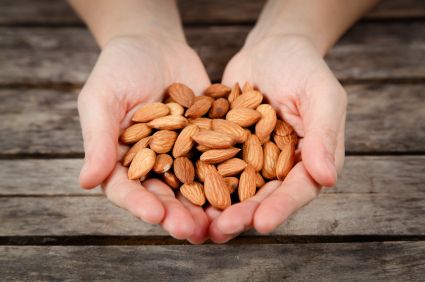
Besides, nuts are the most overhyped foods anyway.
Subscribe to:
Posts (Atom)