Wednesday, June 27, 2012

BPA in Plastic (...and Cans)

At the time this article was written, BPA (Bisphenol A) seems to be the current concern. However, a plastic container that is BPA-free may still contain other chemicals that have yet to be tested to humans. After all, plastic is made from chemicals.
Here's some recommendation:
- Avoid using them (duh). Use glass instead.
- If you have to use them, minimize the use -- like during special occasions when you'll need a bunch of storage.
- As of this writing, limit your use only #2, #4, & #5 plastics.
- Do not expose them to extreme heat as their chemical composition may react. In other words:
- Do not pour hot liquid in them
- Do not use for microwaving (yeah, including TV dinner)
- Do not leave them in a car that's exposed to the sun where you can bake cookies (literally)
Tuesday, June 19, 2012
Chicken

With my recent discovery of using a broiler for fish, I tried to incorporate it to chicken breast (since the grocery store had a sale on chicken breasts recently)...
- It's really simple and very basic.
- Never under cook chicken meat, as you can get sick.
- Boneless chicken breasts dry out easily, so avoid overcooking.
- Cook time: For boneless/skinless chicken breast, about 20 minutes. (Temperature: about 350 Fahrenheit)
- Drizzle with olive oil or melted butter especially if it becomes too dry.
- Vary the seasoning and experiment for your tasting pleasure. Like, topping it with cheese.

Fish
For the past decade, I've been avoiding fish for two reasons: mercury content and too much cooking effort. I've been a fool for believing the mainstream media's dogma (i.e., Common Knowledge) on fish and mercury. I should've investigated better... sooner.
I did my investigation recently and found out that I've been missing out on these:
- Selenium protects against mercury toxicity, and 16 of the 25 highest dietary sources of selenium are ocean fish
- If a fish contains higher levels of selenium than mercury, it is safe to eat
- Most species of commonly eaten fish in the U.S. have more selenium than mercury
- Fish are not significant sources of PCBs and dioxins when compared to meat, dairy or vegetables
- The benefits of eating fish regularly far outweigh the potential risks, which are neglible
- Pregnant mothers and young children should eat 2-3 servings of oily ocean fish each week
- Interested in reading the rest of the article? Here.

------------------------------
So that took care of my first problem. For the 2nd problem, I solved it by asking some co-workers while having lunch. One of us ordered fish for lunch one day, and out-of-the-blue, I brought up how it was a pain to prepare fish. I found out that fish very easy to make (and easy to clean up too). So now, I eat fish at least 2 servings a week. (Hurray!)
Here's what I usually do:
Best of all, this is the reason why I eat fish (tilapia) often:

So that took care of my first problem. For the 2nd problem, I solved it by asking some co-workers while having lunch. One of us ordered fish for lunch one day, and out-of-the-blue, I brought up how it was a pain to prepare fish. I found out that fish very easy to make (and easy to clean up too). So now, I eat fish at least 2 servings a week. (Hurray!)
Here's what I usually do:
- Easiest way to cook fish is Broiling.
- Use a smaller broiler. It's easier on your electric bill, and it will save you some time because of the smaller heating space.
- Use foil for easy clean up.
- Cook time: For fish with bone, about 20 to 30 minutes. For fillet about, 10-15 minutes. (Temperature: 420 to 450 Fahrenheit)
- Use any fish! I've done this on Tilapia, Swai, and Halibut.
Best of all, this is the reason why I eat fish (tilapia) often:

Sunday, June 17, 2012
Nuts for nuts
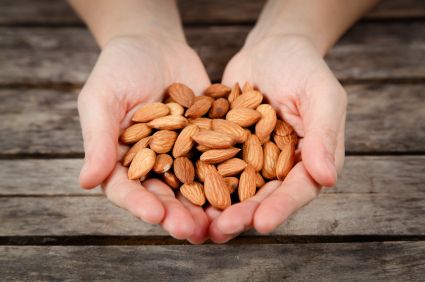
Besides, nuts are the most overhyped foods anyway.
Tuesday, June 14, 2011
Oils
Oil preference in the following order:
1. Coconut Oil. Always choose unrefined. And if possible, choose cold-pressed as well. Always choose coconut oil over olive oil since the former is more superior. One might say, "isn't Coconut Oil very high in saturated fats?" Indeed it is, but saturated fats are not bad for you [link to follow soon].
2. Olive Oil. Choose Extra Virgin Olive Oil (local brand is just as fine as the italian ones and is cheaper). If the labels allow, choose olive oil that is unrefined and cold-pressed. Use the oil within a year's time.
3. Butter/Lard. It's best for cooking in high heat. Bonus points if you can have your waiter cook your meat in butter at restaurants.
Do not use olive oil to sauté, use butter instead or coconut oil because of higher heat tolerance. Extreme heat destroys any oil easily (at least the taste), so it's better to use the cheap butter (or coconut oil). Use oilve oil as topping or flavoring to foods when serving.

As for the ones to avoid, pretty much everything else: corn oil, vegetable oil, soybean oil, cottonseed oil, grape seed oil, sunflower seed oil, safflower oil, and peanut oil. These are to be avoided because they've gone through some major modifications -- after all, no matter how much you squeeze corn or vegetable, it's quite impossible to extract oil from them naturally.
Why this? Why now?
If you asked me back then when I was starting to understand the interwebz that if I'll ever create a "personal" blog, I would say "NO." My belief back then was that blogging are for people who wanted internet attention. I'm not a fan of facebook, myspace, or twitter. To me, blogging was in the same realm.
I'm blogging now because I want to keep a record of the food items that I've decided to be part of my life. Yeah, it's that simple stuff that keeps me alive for each of my waking mornings. I want to get my food stuff right. After all, I deal with it everyday, so I might as well deal with it properly.
Yeah, food may sound too trivial to have a blog for. After all, it's "Conventional Wisdom" (CW), right? However, if one looks at CW closely, CW has gotten it wrong on a lot of occasions throughout history. For example, just look at what CW's stance on smoking 50 years ago vs. now. And don't get me started on grains (which I'll discuss in the future).
I'm hoping that I get to update this blog regularly throughout my lifetime or until I got my food stuff "perfect." I'll try to keep all entries short and to the point. I'll try to avoid long explanations, but will definitely provide links to compelling articles online.
And as for my audience and who they might be...? I'm expecting my audience to be only those people who are close to me -- especially those who may want to learn from what has worked for me as far as food is concerned.
And as a fair warning... read at your own risk. Before you practice any of what I practice, give it a good thought (use your coconut!). Peace out.
Subscribe to:
Posts (Atom)